If Magnolia has ever felt a little hard to pin down, you are not imagining it. This Seattle peninsula looks like one neighborhood on a map, but on the ground it breaks into several distinct pockets with different rhythms, streetscapes, and priorities. If you are trying to figure out where you would actually feel most at home, this guide will help you understand Magnolia’s micro-neighborhoods in a practical way. Let’s dive in.
Why Magnolia Feels So Distinct
Magnolia is shaped as much by topography as by housing. Seattle’s neighborhood history describes the area as a peninsula with a lowland edge at Interbay, a central valley known as Pleasant Valley, a bluff-side ridge, and the northwest Fort Lawton and Discovery Park area.
That geography helps explain why Magnolia often feels self-contained. It is also why one part of the neighborhood can feel walkable and active, while another feels quiet, green, and far removed from commercial activity.
Seattle’s history materials also note that Magnolia is primarily residential, with retail and commercial uses concentrated on the edges. In other words, your day-to-day experience here can change a lot depending on which section of Magnolia you choose.
Magnolia Village: Daily Convenience First
If you want the most walkable part of Magnolia, start with Magnolia Village. This is the neighborhood’s compact commercial heart, where planning documents describe a small cluster of mixed-use blocks with an abrupt transition to mostly single-family residential zoning around them.
The east edge of the village includes 1- to 2-story commercial buildings, a few multifamily and townhouse homes, and a pedestrian-scaled street wall. That built form creates a more compact, everyday neighborhood center than you will find in most other parts of Magnolia.
For many buyers, this area is the easiest fit if you want errands and neighborhood activity nearby without giving up Magnolia’s residential feel. You get a little more day-to-day convenience here, while still being surrounded by mostly housing just beyond the core blocks.
Key places in Magnolia Village
Several neighborhood anchors are located in or near the village core:
- Magnolia Branch Library at 2801 34th Ave W
- Magnolia Community Center
- Magnolia Playfield
- Mounger Pool
- Magnolia Farmers Market at W McGraw St and 33rd Ave W
The library offers a meeting room, study room, public computers, Wi-Fi, free parking, and bus access. The community center sits beside playfields and tennis courts and is connected to Catharine Blaine Elementary.
What the homes feel like nearby
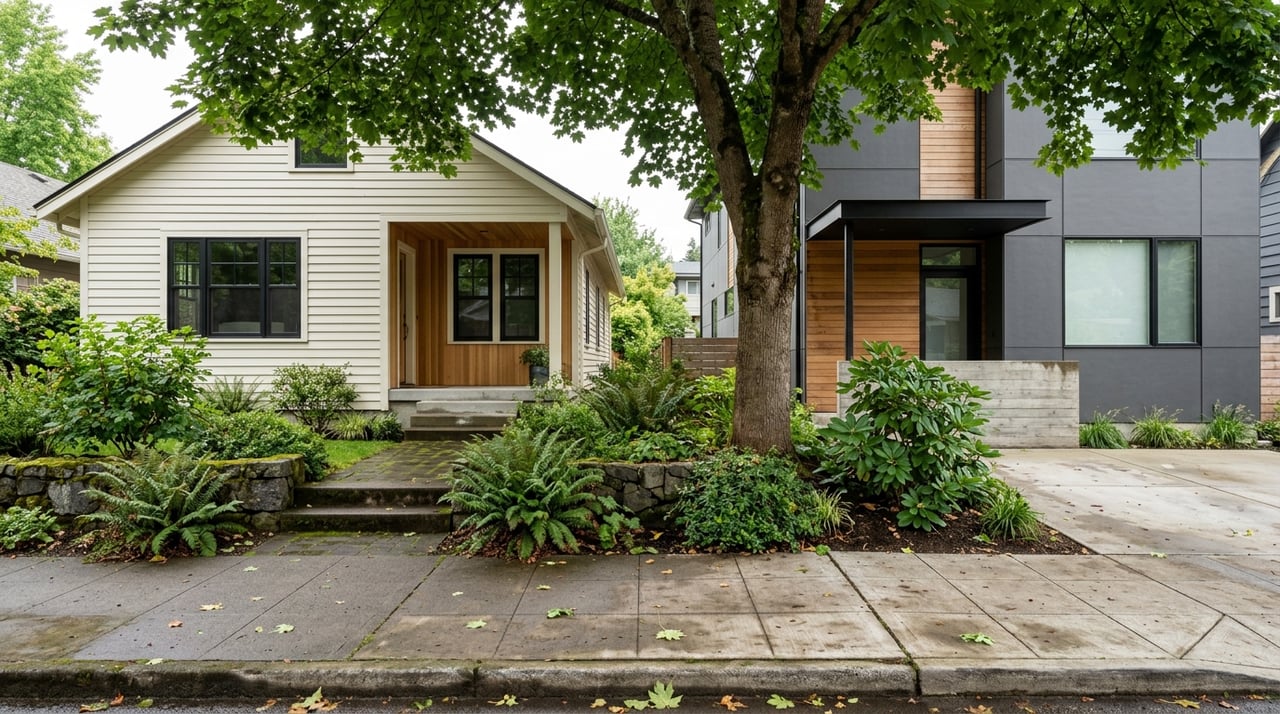
Just outside the commercial blocks, homes tend to shift back toward single-family residential streets. Around the library and village, planning and history documents describe a larger-parcel postwar residential fabric with one- and two-story historic-revival or contemporary single-family homes.
That mix gives this part of Magnolia a useful balance. You can have access to neighborhood amenities while still landing on a street that feels primarily residential.
Pleasant Valley: A Calmer Interior Option
Pleasant Valley sits in the relatively flat middle ground between Magnolia’s ridges. Historically, Seattle describes it as an area first settled with farms and orchards around 1900 and later developed into a motorized streetcar suburb with many single-family middle-class houses.
Today, this central interior tends to feel quieter and more tucked away than the bluff or the village edge. If your priority is a calmer street pattern and a more traditional residential setting, Pleasant Valley is often the part of Magnolia worth a closer look.
This is one of the reasons Magnolia can appeal to buyers who want a neighborhood that feels less hurried than some other Seattle locations. Even within city limits, certain blocks here can feel insulated from the pace of nearby commercial corridors.
Why buyers look to the interior
The interior sections of Magnolia are often the best fit if you value:
- Quieter residential streets
- Larger single-family parcels
- A more traditional house-oriented setting
- Some separation from retail activity
This does not mean every block feels the same. But as a general pattern, the interior offers a steadier residential character than the village center or the more dramatic bluff streets.
Bluff-Side Streets: Views and Drama
For many people, Magnolia’s signature image is the bluff. If your wish list starts with outlook, elevation, and a stronger sense of scenery, this is the section that usually stands out first.
Seattle Parks describes Magnolia Boulevard as a long strip of green space with stunning Puget Sound views. Magnolia Park, also on the bluff, includes picnic areas, tennis courts, grills, restrooms, a play area, and views over Puget Sound.
Then there is Discovery Park, which occupies much of the former Fort Lawton site on Magnolia Bluff. At 560 acres, it is Seattle’s largest park and includes tidal beaches, sea cliffs, forests, meadows, trails, and mountain views.
What makes bluff living different
The bluff-side streets usually come with a different tradeoff than the village core. You may have less immediate retail convenience right outside your door, but you gain closer access to open space, view corridors, and a more dramatic topographic setting.
Historically, Magnolia Bluff was described as a residential area with panoramic water and city views. In practical housing terms, that terrain often lines up with a stronger premium on outlook and outdoor space.
For design-aware buyers, this part of Magnolia can be especially compelling because the setting does so much of the work. The streets, slopes, and sightlines create a strong sense of place that feels distinctly Magnolia.
Lawton Park and the Discovery Side
On Magnolia’s north and northwest edge, the neighborhood shifts again. This is the most park-oriented section, where open space becomes a defining part of daily life.
Seattle Parks describes Lawton Park as a quiet neighborhood park with wooded hills, grassy lawns, trails, and views of Ballard and the Ship Canal. Its restoration planning also notes native vegetation and connections to surrounding open space.
Discovery Park adds a much larger natural layer. The park’s 560 acres include protected tidal beaches, sea cliffs, forest groves, dunes, and meadows, making this side of Magnolia feel especially green and secluded.
Who tends to like this side
If your ideal Magnolia is more trail-oriented than retail-oriented, the north edge often makes the most sense. Buyers drawn to lower-traffic surroundings and immediate access to parks usually focus here first.
This area reads differently from the village core for good reason. Historically, parts of Magnolia’s lowland communities included industrial uses, small stores, taverns, and boarding houses for railroad workers, which adds another layer to how the broader area evolved over time.
Briarcliff and Southeast Magnolia
You may also hear subarea names like Briarcliff, Lawton Park, or Southeast Magnolia. Seattle’s City Clerk atlas uses those names for record indexing, which makes them useful shorthand when talking about different parts of Magnolia.
At the same time, the city notes that those names and boundaries are not official neighborhood mapping. So if you see slightly different labels from one source to another, that is normal.
For a home search, the more helpful approach is usually to focus on what each pocket feels like in real life. Ask whether you want convenience, views, quiet residential streets, or immediate access to parks, then narrow your search from there.
How To Choose the Right Pocket
Magnolia works best when you match the micro-neighborhood to your actual lifestyle. The right fit is less about a label and more about how you want your days to function.
Here is a simple way to think about it:
- Choose Magnolia Village if you want errands, library access, community-center amenities, and the most compact neighborhood center.
- Choose the bluff if views, open space, and dramatic topography matter most.
- Choose the interior if you want quieter residential streets and a more traditional single-family setting.
- Choose the north edge if you want a greener, more secluded, trail-oriented experience.
For buyers relocating within Seattle or moving from out of town, Magnolia can feel a little like several neighborhoods folded into one. That is part of its appeal, but it also means a block-by-block strategy matters.
Why Local Context Matters in Magnolia
Because Magnolia changes so much from one section to the next, broad descriptions only go so far. A home near the village may live very differently than one near Discovery Park, even if both share the same neighborhood name.
That is where local context becomes valuable. Understanding the tradeoffs between convenience, views, lot feel, and access to open space can help you shop more clearly and avoid chasing the wrong part of the neighborhood.
If you are buying or selling in Magnolia, that nuance matters. It shapes pricing, marketing, and even how a property’s best story should be told.
Magnolia is not one-note, and that is exactly what makes it interesting. If you want help sorting through the neighborhood’s different pockets, planning a move, or understanding how a specific home fits into Magnolia’s broader landscape, connect with Michael Green.
FAQs
What is the most walkable part of Magnolia for daily errands?
- Magnolia Village is generally the most walkable part of the neighborhood because it contains Magnolia’s compact commercial core, along with nearby access to the library, community center, and farmers market.
Which part of Magnolia is best for views and open space?
- The bluff-side streets are the strongest fit if you want views and dramatic scenery, with Magnolia Boulevard, Magnolia Park, and Discovery Park all contributing to that setting.
What does Pleasant Valley feel like in Magnolia?
- Pleasant Valley is Magnolia’s flatter interior area and tends to feel quieter and more residential, with historical roots as a farm and orchard area that later developed into a streetcar suburb.
Where should you look in Magnolia for trail access?
- The north and northwest edge near Lawton Park and Discovery Park is usually the best place to start if trail access and green surroundings are high on your list.
Are Briarcliff and Southeast Magnolia official neighborhood boundaries?
- Seattle uses names like Briarcliff and Southeast Magnolia in its City Clerk atlas for record indexing, but the city notes those labels are not official neighborhood boundaries.